
ANNONCE
Pineapple Upside Down Cake: The Real Traditional Recipe [Distinctive Element]
Pineapple Upside Down Cake is a classic dessert that has delighted taste buds for generations. Its origins can be traced back to the early 20th century, when canned pineapple became widely available, allowing for the creative and visually appealing cake recipe to flourish. In this article, we will explore the significance of key ingredients, provide a detailed recipe, and discuss variations and adaptations of this beloved dessert.
Why is Pineapple Used in Pineapple Upside Down Cake?
The Benefits and Culinary History of Pineapple
Pineapple, a tropical fruit that hails from South America, is renowned for its sweet and tangy flavor profile. When used in Pineapple Upside Down Cake, the fruit provides moisture and adds a unique layer of flavor that complements the rich, buttery cake base. Moreover, pineapples are high in vitamin C and have digestive benefits due to the enzyme bromelain, which can aid in breaking down proteins.
The use of pineapple in cake recipes began as an innovative way to incorporate canned fruit, a convenience that gained popularity in American households during the Great Depression. As the recipe evolved, it became a symbol of hospitality and indulgence, often served at gatherings and special occasions.
Possible Alternatives to Replace Pineapple
While pineapple is the quintessential fruit in this dessert, there are alternatives for those seeking different flavors or with dietary restrictions. Options include:
ANNONCE
- Peaches: Offering a sweet and slightly tangy flavor, peaches can serve as a delightful substitute.
- Cherries: Maraschino cherries provide a classic look and a burst of sweetness that pairs well with the cake.
- Mango: Mangoes bring a tropical twist, adding a rich flavor and vibrant color.
Ingredients in Pineapple Upside Down Cake
Basic Products
To create a traditional Pineapple Upside Down Cake, the following basic ingredients are required:
- Butter: Typically unsalted, it adds richness and moisture.
- Brown Sugar: When melted, it creates a sweet, caramelized layer underneath the fruit.
- Canned Pineapple Slices: The centerpiece of the dish, providing both flavor and a decorative quality.
- Flour: All-purpose flour serves as the foundation for the cake structure.
- Baking Powder: A leavening agent that helps the cake rise.
- Eggs: Essential for binding the ingredients together.
- Milk: Adds moisture and richness to the batter.
Essential Seasonings or Add-ins
Seasonings and add-ins can enhance the cake’s flavor profile:
- Vanilla Extract: A splash adds warmth and enhances the overall flavor.
- Salt: A pinch balances the sweetness of the cake and enhances flavors.
- Coconut Flakes: For a tropical flair, shredded coconut can be added to the batter.
Preparation of Pineapple Upside Down Cake
Step 1 – Preparing the Ingredients
Begin by gathering all necessary ingredients. Preheat your oven to 350°F (175°C). Grease a 9-inch round cake pan and set aside.
Step 2 – Pre-Cooking or Special Preparation
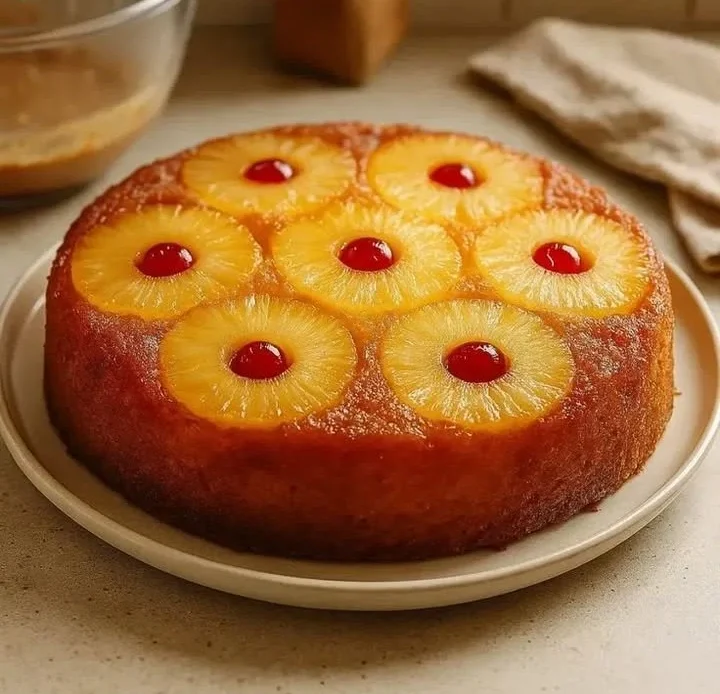
Melt half a cup of butter in a saucepan over low heat. Once melted, remove from heat and stir in one cup of brown sugar until well combined. Pour this mixture into the greased cake pan, ensuring it covers the base evenly. Arrange the pineapple slices over the brown sugar mixture, placing a maraschino cherry in the center of each slice for added visual appeal.
ANNONCE
Step 3 – Mixing and Assembling
In a large mixing bowl, combine one and a half cups of all-purpose flour, two teaspoons of baking powder, and a pinch of salt. In another bowl, beat two eggs with one cup of granulated sugar until creamy. Gradually add half a cup of milk and one teaspoon of vanilla extract until fully incorporated. Slowly mix in the dry ingredients until just combined.
Step 4 – Cooking and Finishing
Carefully pour the batter over the arranged pineapples in the cake pan. Bake in the preheated oven for 35-40 minutes or until a toothpick inserted into the center comes out clean. Allow the cake to cool in the pan for 10 minutes, then invert it onto a serving plate to reveal the beautiful pineapple topping.
Variations and Adaptations of Pineapple Upside Down Cake
Regional or Traditional Version
Different regions may have their own twists on this classic dessert. For example, in Hawaii, a version may incorporate macadamia nuts or coconut for a more tropical feel, reflecting the local cuisine.
Modern or Revisited Version
Modern adaptations may feature gluten-free flour or plant-based substitutes for a more health-conscious approach. Some bakeries now create layered versions of the cake, alternating pineapple with other fruits or flavors such as chocolate.
ANNONCE
Adaptations to Suit Your Tastes
Customization is key when it comes to Pineapple Upside Down Cake. For a lower-sugar option, consider using less brown sugar or a sugar substitute. People desiring a spicy kick can add a hint of cinnamon or nutmeg to the batter. Vegetarian and vegan versions also exist, utilizing flaxseed meal or chia seeds as egg substitutes and plant-based milk to maintain moisture.
Frequently Asked Questions about Pineapple Upside Down Cake (FAQ)
Q: Can I use fresh pineapple instead of canned?
A: Yes, fresh pineapple can be used, but ensure it is ripe and cut into even slices for best results.
Q: How should I store leftover cake?
ANNONCE
A: Store leftovers in an airtight container at room temperature for up to 2 days, or refrigerate for longer freshness.
Q: Can I freeze Pineapple Upside Down Cake?
A: Yes, it can be frozen for up to three months. Wrap it tightly in plastic wrap and aluminum foil before freezing.
Pineapple Upside Down Cake stands out as a delightful dessert, celebrating the harmonious blend of sweet, tangy fruit and soft, buttery cake. Whether observed in its traditional form or one of its many adaptations, this dessert continues to evoke nostalgia and satisfy cravings worldwide. Enjoy recreating this cherished recipe and sharing it with loved ones!
ANNONCE